
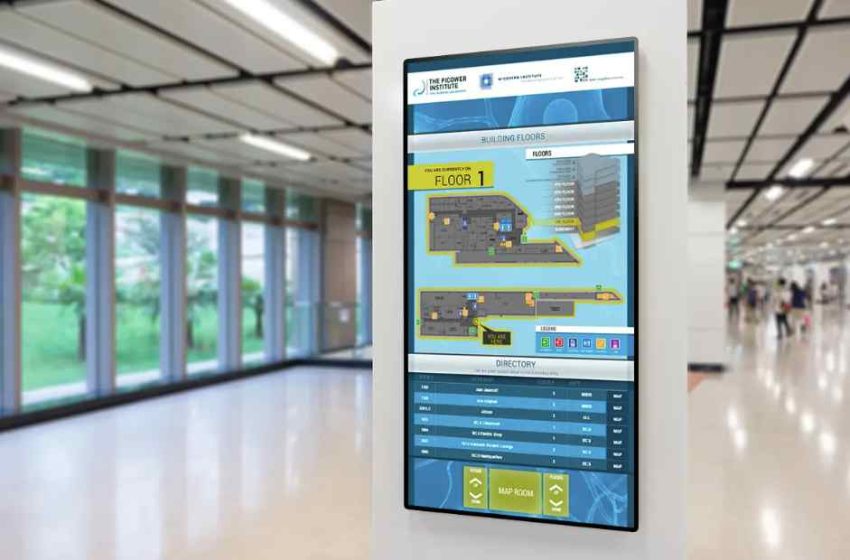
Visitors wandering aimlessly through your facility aren’t just frustrated—they are actively draining your revenue. Whether you manage a major hospital in Parkville or a sprawling corporate hub in the CBD, confused guests lead to missed appointments, interrupted staff, and tanking customer satisfaction scores.
Digital wayfinding in Melbourne is a network of interactive, real-time mapping solutions that guide users seamlessly through complex spaces using smart touchscreens and mobile hand-offs. It replaces outdated static signage to instantly reduce visitor anxiety, eliminate navigational confusion, and optimize your building’s traffic flow.
In my years of designing spatial tech for large venues, I’ve learned that a digital map is completely useless if it isn’t intuitive. Here is what actually works when you need to modernise your facility’s navigation optimisation.
Why is Digital Wayfinding Crucial for Melbourne Facilities?
Melbourne is a city of intricate architecture, multi-level shopping precincts, and sprawling university campuses. Static signs simply cannot keep up with dynamic environments where room layouts, department locations, and access paths frequently change.
If you rely on printed maps and wall arrows, your visitors are already frustrated before they even reach their destination.
The Hidden Cost of Lost Visitors
The financial drain of poor navigation is staggering. According to Health Facilities Management, hospitals lose an estimated $220,000 annually simply because staff members have to stop their actual work to give directions. If your highly paid employees are acting as daily tour guides, you are losing money and severely hurting productivity.
What Are the Core Features of a High-Performing System?
The mistake I see most often is decision-makers buying incredibly expensive touchscreen hardware while completely ignoring the user experience (UX) of the software. To satisfy both your visitors and your bottom line, your system must include these non-negotiable capabilities:
- Mobile Hand-off: Users can scan a QR code on the kiosk to instantly transfer the route to their smartphone.
- Real-Time Rerouting: Instantly direct visitors away from closed corridors, ongoing maintenance, or out-of-order elevators.
- Smart Search: Allow guests to search easily by department name, specific staff member, or exact services.
How Can You Implement Digital Wayfinding Successfully?
Upgrading your navigational infrastructure does not have to be a logistical nightmare. In my experience, the key to a frictionless rollout is starting with a thorough audit of your current user journeys.
- Map the high-traffic bottlenecks: Identify exactly where people physically stop, look around, and appear confused.
- Choose environment-specific hardware: Outdoor CBD kiosks require high-brightness, weather-proof enclosures, while indoor corporate units should focus on sleek, accessible designs.
- Integrate with existing data: Connect your wayfinding software directly to your facility management system so room changes update automatically across all screens.
Conclusion
Stop letting poor navigation ruin your visitor experience and drain your staff’s valuable productivity. Implementing digital wayfinding in Melbourne is no longer just a high-tech luxury; it is an operational necessity for any modern, high-traffic facility.
Are you ready to modernise your space and permanently eliminate navigational friction? Contact our team today to schedule a comprehensive spatial audit for your building.