
The exterior of a commercial property acts as a constant physical presentation to every driver, pedestrian, and potential customer passing by. Long before an individual interacts with your customer support team, browses your website, or purchases your products, your building’s exterior shape and visual signage set their expectations. Ineffective or poorly placed exterior signs create unnecessary confusion, while clear, durable, and highly visible building signs establish instant credibility, direct traffic effortlessly, and elevate your brand presence in the local community.
Planning effective building signage requires analyzing physical visibility, local zoning regulations, and environmental durability. Exterior signs operate continuously under harsh weather conditions, meaning materials and structural engineering must be selected carefully to maintain visual quality over time. Property managers and business owners frequently work alongside specialists like AlphaGraphics Brentwood to design and install customized building displays that optimize location visibility. Understanding how exterior signage operates as a key component of physical infrastructure allows organizations to convert passive traffic into active customer interest.
Key Functions of Exterior Building Signage
Exterior signs do far more than simply label a physical space. They serve essential operational, promotional, and directional purposes that directly impact how visitors interact with your facility.
- Primary identification: A bold main building sign acts as your primary physical marker, confirming to visitors that they have safely arrived at the correct destination.
- Wayfinding guidance: Exterior directional signs guide vehicle drivers and pedestrians smoothly from public roads toward parking spaces, main entrances, and delivery docks.
- Local brand awareness: Permanent street-facing signs expose your business identity continuously to daily commuters, building familiar brand recognition over time.
Popular Exterior Sign Types and Their Practical Applications
Selecting the correct signage format depends on your property structure, set distance from the road, local municipal regulations, and surrounding architectural style.
1. Dimensional Letters and Channel Letters
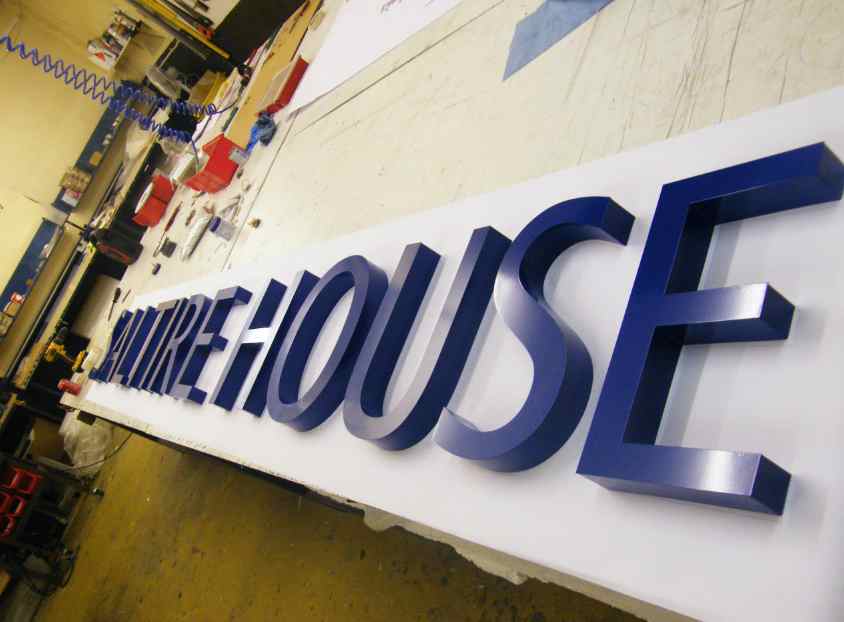
Dimensional and channel letter displays feature individual letters or logos mounted directly to a building facade. These signs offer a clean, three-dimensional look that integrates seamlessly with modern architecture. They can be unlit, front-lit, or halo-lit from behind to create high visual impact during nighttime hours.
2. Monument and Pylon Signs
If your building sits far back from the roadway or is hidden by trees, wall-mounted signs may be hard to read for passing drivers. Monument signs—freestanding ground-level structures built from stone, brick, or metal—and taller pylon signs elevate your main message near the street edge for maximum visibility from distance.
3. Cabinet and Box Signs
Cabinet signs enclose your logo and business name within a durable frame, typically featuring interior LED lighting for full illumination. They offer a strong, weather-resistant solution for multi-tenant commercial plazas and retail centers where consistent sizing is required.
Essential Design Factors for Maximum Sign Visibility
Designing an effective exterior sign involves balancing artistic aesthetics with clear practical engineering. If a sign cannot be easily read by a driver traveling at 45 miles per hour, it fails to achieve its primary purpose.
- Scale letter height to viewing distance: A useful guideline for sign readability is allowing one inch of letter height for every ten feet of viewing distance.
- Optimize visual contrast: High contrast between text colors and the background surface ensures letters remain readable in bright sunlight, rainy weather, or low-light conditions.
- Avoid text clutter: Limit exterior messaging to key identifiers—such as your business name, primary logo, and street number—to avoid distracting drivers.
Steps for Planning an Exterior Sign Installation
Executing a successful exterior sign project requires proper planning to avoid regulatory delays, structural issues, or premature material failure.
Step 1: Conduct a Physical Site Survey
Walk your property from multiple angles, viewing the building facade from moving traffic, nearby sidewalks, and parking lot entrances. Identify potential sightline obstructions like trees, utility poles, or neighboring structures to determine optimal sign placement.
Step 2: Research Local Zoning Laws and Permits
Before finalizing sign dimensions or ordering materials, check your local city municipal codes and property lease agreements. Most commercial zones enforce strict limits regarding allowable square footage, overall height, illumination levels, and installation permits.
Step 3: Select Weather-Resistant Materials
Exterior signage must withstand severe heat, UV radiation, freezing temperatures, wind gusts, and rainfall. Choose high-grade exterior materials like rust-proof aluminum, heavy-duty acrylics, rot-resistant high-density urethane (HDU), and UV-stable exterior paints to ensure longevity.
Maintaining and Evaluating Your Building Signage
An exterior sign requires ongoing maintenance to preserve its appearance and functional safety. Inspect your physical signs regularly for burnt-out LED modules, accumulated dirt, or structural wear caused by extreme weather. Replacing damaged components promptly preserves your professional reputation and prevents structural hazards. Evaluating your exterior visibility regularly ensures your facility remains easily identifiable, highly accessible, and welcoming to new visitors every single day.